
Federal Release Record Scope
Federal Bureau of Prisons and federal contract custody appear in the Craig County facility map as a system route, not as a claim that a BOP prison stands in the county. A person arrested locally can have a federal case, can be housed under a U.S. Marshals Service arrangement, or can later enter a BOP institution elsewhere. The committing court and federal identifiers determine the search.
BOP's locator covers federal prisoners from 1982 onward. A former BOP result may show “RELEASED” with a date or “Not in BOP Custody.” Both phrases describe BOP's own custody. They do not rule out a state prison, county jail, immigration detention, military custody, another authority, or federal supervision in the community.
| Federal source | People covered | Release limit |
|---|---|---|
| BOP locator | Federal prisoners within locator coverage | Speaks only to BOP custody |
| USMS and federal court | Federal pretrial and contract detention | No nationwide USMS historical locator |
| ICE ODLS | Current and recently released immigration detainees | Separate from criminal BOP status |
| County or ODOC | Local jail or Oklahoma state custody | Does not establish federal release |
Search Federal Inmate Release
Open the official BOP Inmate Locator. An identifier search is strongest. The locator accepts a BOP register number, DCDC number, FBI number, or INS number. A name search allows optional age, race, and sex fields. Compare every available identifier before combining the result with a Craig County case or arrest.
- Search by register number when known. Otherwise enter the legal name and available narrowing fields.
- Open or preserve the matching result, including name, register number, age, race, sex, release date, and location or status as displayed.
- Read a past release date with “RELEASED” as departure from BOP custody, not proof of freedom from every custodian.
- Treat a future date as projected. Recalculation, including sentence-credit changes, may alter it.
- If the result says “UNKNOWN” or no record appears, move to the federal court, USMS district, facility, archives, or FOIA route that fits the case.
The BOP locator's structure and release legend can be seen on the official federal locator.
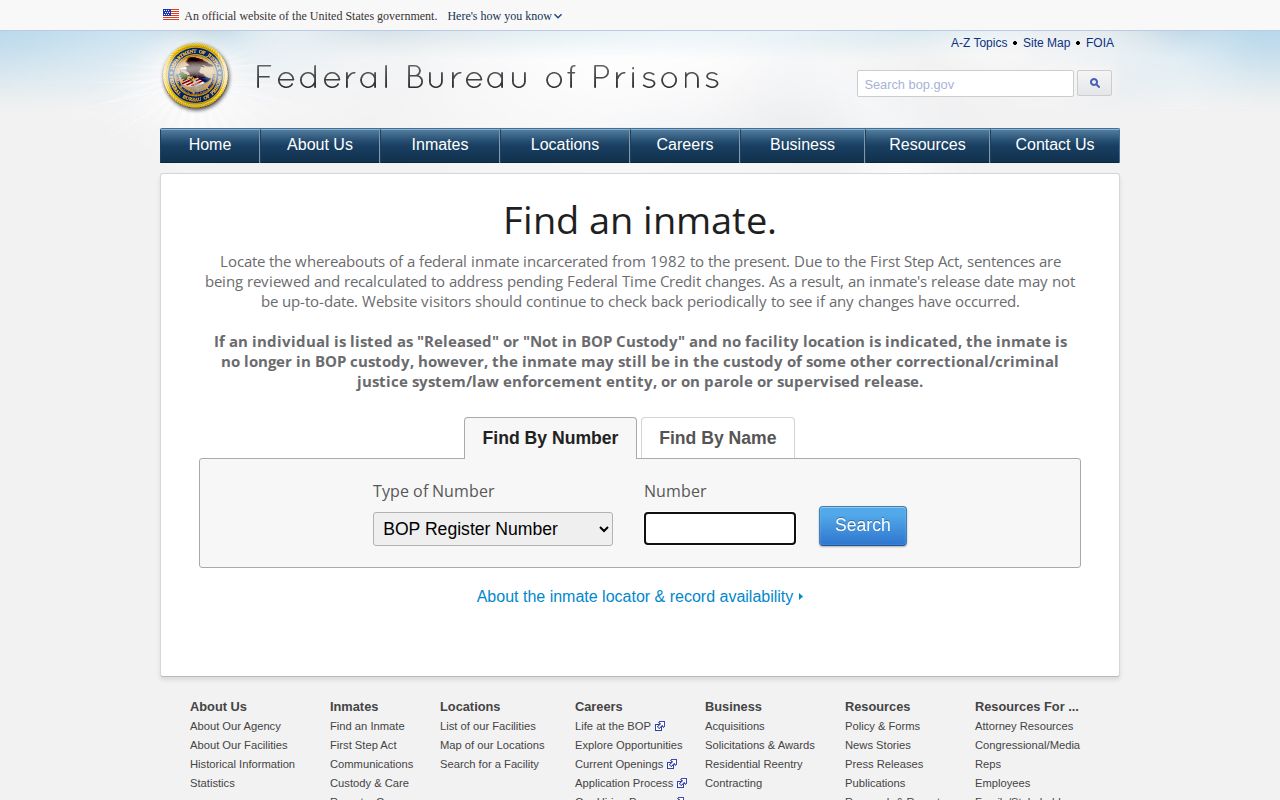
The image helps distinguish a BOP result from Craig County and ODOC records, which cover different custody systems.
Federal Contract Custody Records
The U.S. Marshals Service manages many federal pretrial and sentenced prisoners and can house them in contract facilities. It does not run a public nationwide historical detainee locator comparable to BOP. A person can be held locally under federal authority and released directly through federal court without ever receiving a BOP locator record.
Begin with the relevant federal docket or court paperwork. Identify the district, case number, detention order, release order, and USMS district. Then contact the district or detention facility named in the record. The USMS Prisoner Operations overview explains the agency's custodial role, while the actual district and court supply case-specific confirmation.
A release order can precede physical processing or another hold. Ask which facility held the person, when USMS custody ended, and whether another authority received the person. If BOP later shows “IN TRANSIT,” preserve that wording. Movement between federal facilities or agents is not release.
Note: A federal court order supplies legal authority, while the responsible custodian confirms the operational release or transfer.
Federal Inmate Release Records
When the locator does not supply enough detail, use the BOP FOIA route. Identify the person through full name, register number or other federal identifier, date of birth if known, and the relevant period. Ask for the final release or transfer record, recorded date, facility, status, and destination or receiving authority if that information is available and public. Do not assume that all protected fields will be disclosed.
The BOP records-request screen is a fitting source for this federal record path.
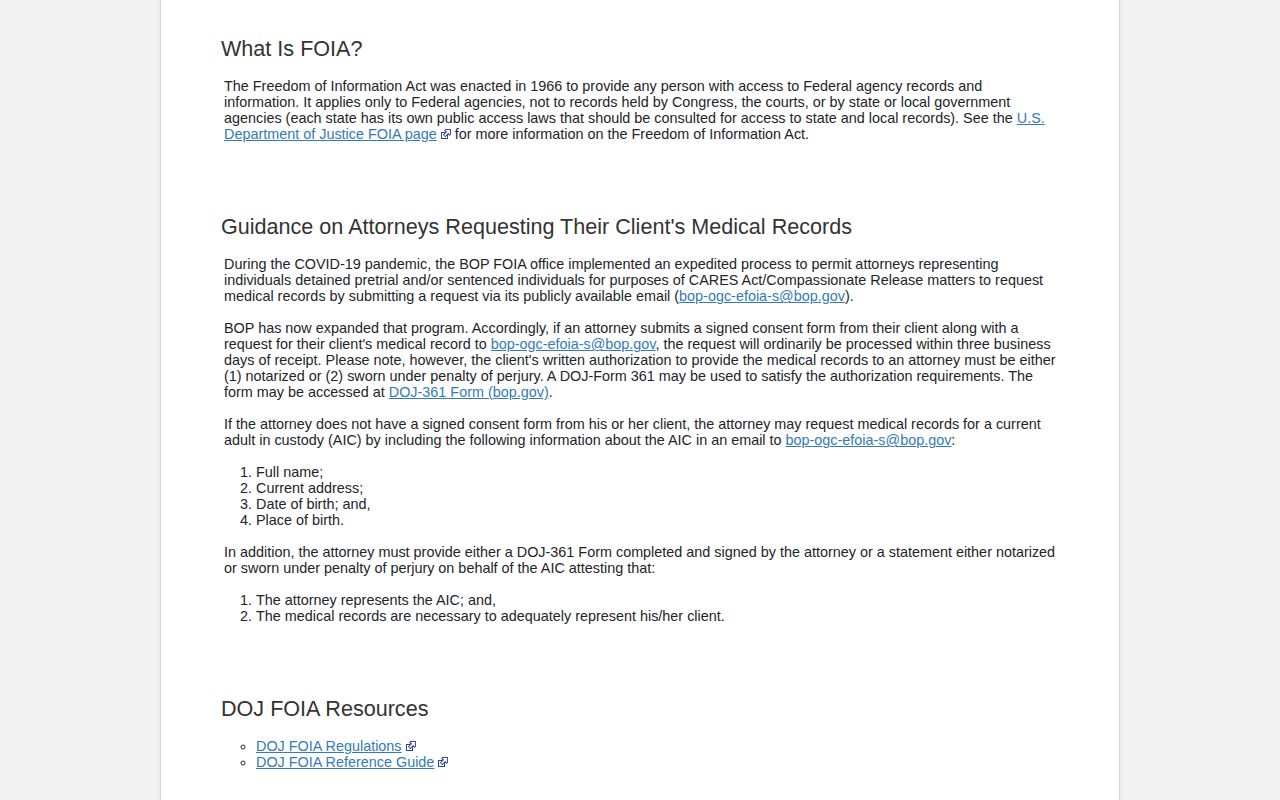
The federal request route should be used for BOP records, while county and ODOC custodians retain their own separate files.
Pre-1982 federal prison research routes to the National Archives rather than the ordinary modern locator. A USMS pretrial record may require the relevant district or a federal records request outside BOP. No local Craig County office can certify a federal release merely because the arrest or family connection was local.
- Register number
- The durable BOP identifier used to distinguish people with similar names.
- Projected date
- A future calculation that can change and is not a completed release.
- Federal supervised release
- Court-ordered community supervision that may follow confinement and is not BOP custody.
- Contract custody
- Physical detention in a facility used by a federal agency without making it a BOP prison.
Federal Release and ICE Custody
Immigration custody uses the ICE Online Detainee Locator System, not BOP. ODLS supports a nine-digit A-number plus country of birth or an exact biographical search. Add leading zeros when an A-number is shorter. Exact spelling, name order, aliases, date of birth, country of birth, and diacritics can affect matching. The locator excludes people under 18.
ICE states that ODLS includes current detainees and people released within the preceding 60 days. A disappearance after that window does not prove that no immigration custody existed. The Detention Reporting and Information Line is 888-351-4024 when the locator route needs follow-up.
A county jail release to an ICE detainer is a transfer of custody. If the Craig County movement entry names ICE and ODLS finds the same person, describe release from the county followed by immigration custody. Do not call it community release. Likewise, a BOP “RELEASED” result does not rule out a later or separate ICE event.
Craig County Federal Boundaries
Craig County Jail answers county custody. ODOC answers Oklahoma imprisonment and state community supervision. BOP answers federal sentences within its system. USMS and the federal court answer pretrial and contract detention. ICE answers immigration detention within its locator limits. Each source should be asked only the question it can answer.
A local name can disappear from the sheriff roster because of release, transfer, or an update. If the county record names a federal destination, follow that record into the correct federal system. If no federal authority appears, do not search BOP merely because a state or local result is absent. The committing case and receiving agency are the bridge.
The Craig County released-inmate records search places federal checks beside the county, state, court, and VINE routes. It also explains why one custodian's release does not settle the person's status everywhere else.
Confirm Federal Release Outcomes
Use exact, agency-limited conclusions. “BOP reports RELEASED on the displayed date” is supported by a matching locator result. “The person is no longer in BOP custody” stays within the same boundary. “USMS custody ended under the court order” needs a district, facility, or agency record. “ICE lists a recent release” belongs to immigration custody and its stated window.
Check identity with more than a name. Register number, FBI or INS number, date of birth, court case number, and consistent case facts reduce namesake errors. Preserve search times because locators change. A past BOP date can coexist with later state, county, or immigration custody, while a future date can change.
No BOP prison or ICE detention center was identified within Craig County. The federal route is conditional on a federal case and does not claim a local institution. The correct record may come from a federal institution elsewhere, a contract jail, the federal court, USMS, BOP FOIA, ICE, or archives.
A no-result search also has several causes. The person may have been released before the modern BOP locator period, may be a federal pretrial detainee under USMS, may use a different name spelling, or may never have entered BOP custody. Recheck the federal docket and identifiers. For an older BOP sentence, use National Archives. For a current pretrial case, contact the relevant USMS district or facility through official court information.
Federal supervision after prison is normally a court matter and should not be confused with BOP confinement. A person can be outside BOP custody while still subject to supervised release terms. The federal docket and supervising court or probation channel carry that status. BOP's past release date remains useful, but it answers only when BOP custody ended.
Note: Match the release statement to the named federal custodian and identify any receiving authority before describing community return.
Federal Release Record Timeline
When a federal and Craig County record both exist, place them in time order. A local booking can precede a federal pickup, or a federal release can precede a later local case. Compare register number, case number, arresting agency, and dates. Do not merge separate custody periods merely because the same name appears in both systems. Each custodian confirms only its own movement.